How Virtual Fencing Can Transform Grazing Systems
Grainne O’Doherty is dedicating her career to improving animal welfare and making farming more sustainable. Through her PhD research, she has been using Monil virtual fencing to understand how cattle learn, behave, and perform, revealing promising benefits for both farmers and livestock.
Researching the Future of Grazing Systems
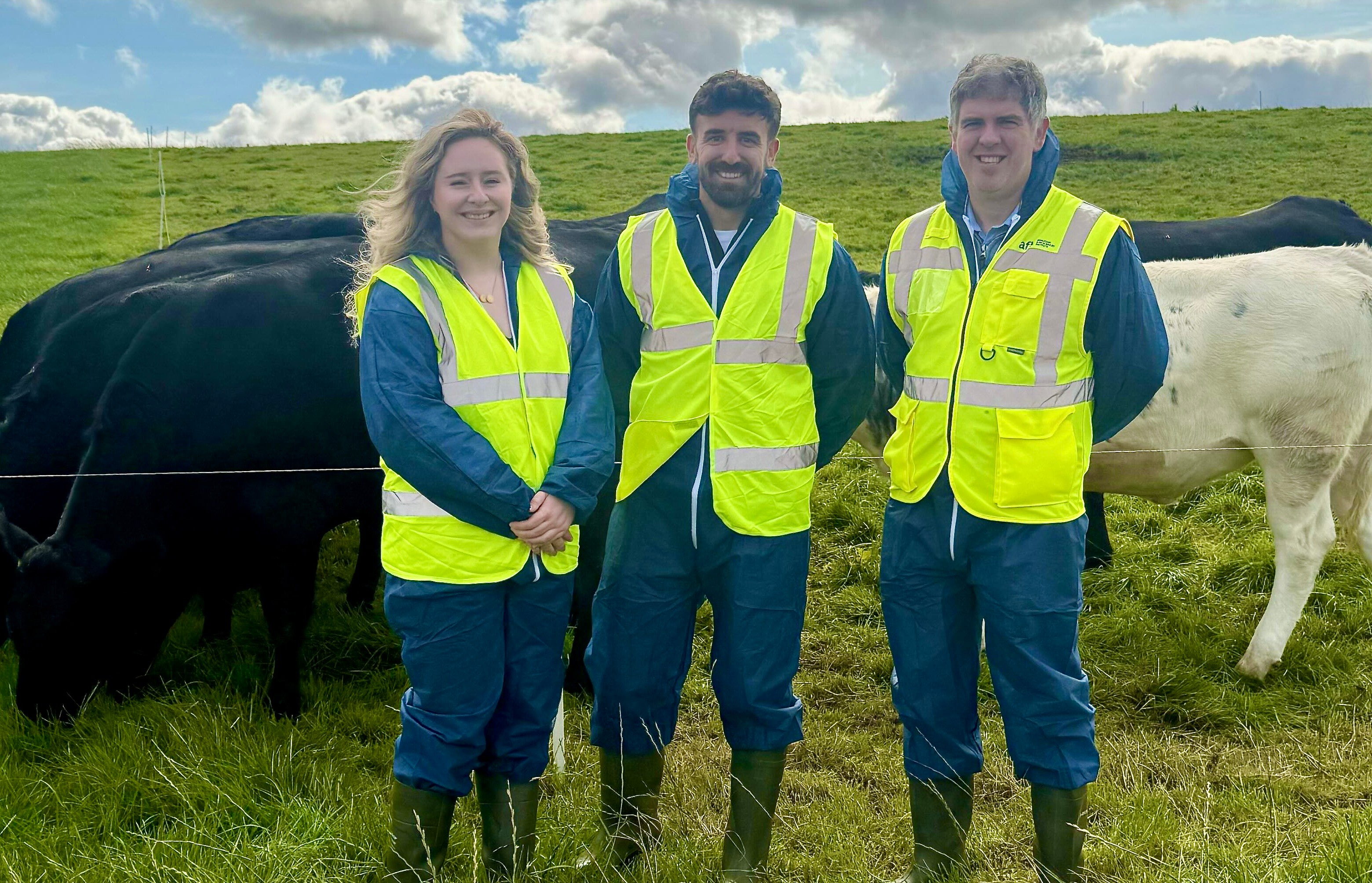
Grainne O'Doherty is a second-year PhD student at Queen's University Belfast. Her research focuses on the use of Precision Livestock Technologies in future grazing systems, with a specific emphasis on Virtual Fencing.
As an Animal Welfare Scientist, Grainne is committed to rigorously testing the welfare of sheep and cattle in virtual fence systems. She is also dedicated to support farmers by finding solutions to the growing pressures on the industry to adopt more sustainable farming practices.
This is important to her as she’s had a front row seat to the ups and downs of farming, having grown up on a sheep and suckler farm in County Donegal.
An Academic Journey Shaped by Animal Welfare
Her love for animal welfare and sustainable farming directed her academic path. She studied Biological Sciences and later specialised in Zoology at University College Dublin.
Immediately after this, she completed her master's degree in Animal Behaviour and Welfare in 2018 at Queen's University Belfast, where she met her current supervisor, Prof. Gareth Arnott.
Fast forward to October 2024, Grainne began her PhD, funded by the FoodBioSystems DTP.
Contributing to the Virtual Fencing Conversation
Grainne's research is a part of the larger conversation around virtual fencing. She hopes her research will gain insights to better inform training protocols and provide a better understanding of how to use virtual fencing effectively.
Alongside evaluating potential effects on animal welfare, she hopes to test the application of virtual fencing in different precision grazing strategies. She’s excited about finding methods to enhance animal performance and develop more sustainable grazing practices.
Applying Monil in the research
In her latest study at AFBI Hillsborough, she has been using Monil virtual fencing since early June, with the trial concluding at the end of September.
The study compares virtual fencing to traditional electric fencing for strip-grazing, using forty Angus-Holstein heifers.
“Everything’s going really well! The heifers seem to have picked it up quickly,” she shares.
“While I haven’t analysed the labour efficiency data yet, I can report anecdotally that setting up virtual fences takes about a third of the time it takes to set up electric ones.”
Potential Benefits for Farmers and Animal Welfare
Grainne is hopeful that her research will highlight the benefits of virtual fencing to farmers. By saving time on moving fences, they can focus on the aspects of farming they truly enjoy.
This extra time could lead to better animal health and welfare on their farms, both in terms of the extra free time farmers have, but also from the valuable data and monitoring Monil collars provide.
On top of this, Grainne is using various metrics to robustly assess animal welfare, like heart rate, cortisol samples, and behavioural tests. She’s eager to learn what factors might influence animal learning in virtual fencing.
“It’s been so interesting to watch the heifers! Some are daring enough to test the boundaries for a bit of the tastier grass, while others are more cautious. It’s amazing how smart they are; they know when to turn around based on the audio cue,” she explains with a smile.
Key Observations from the Research Team
Some positives of using Monil’s virtual fencing according to Grainne and her team:
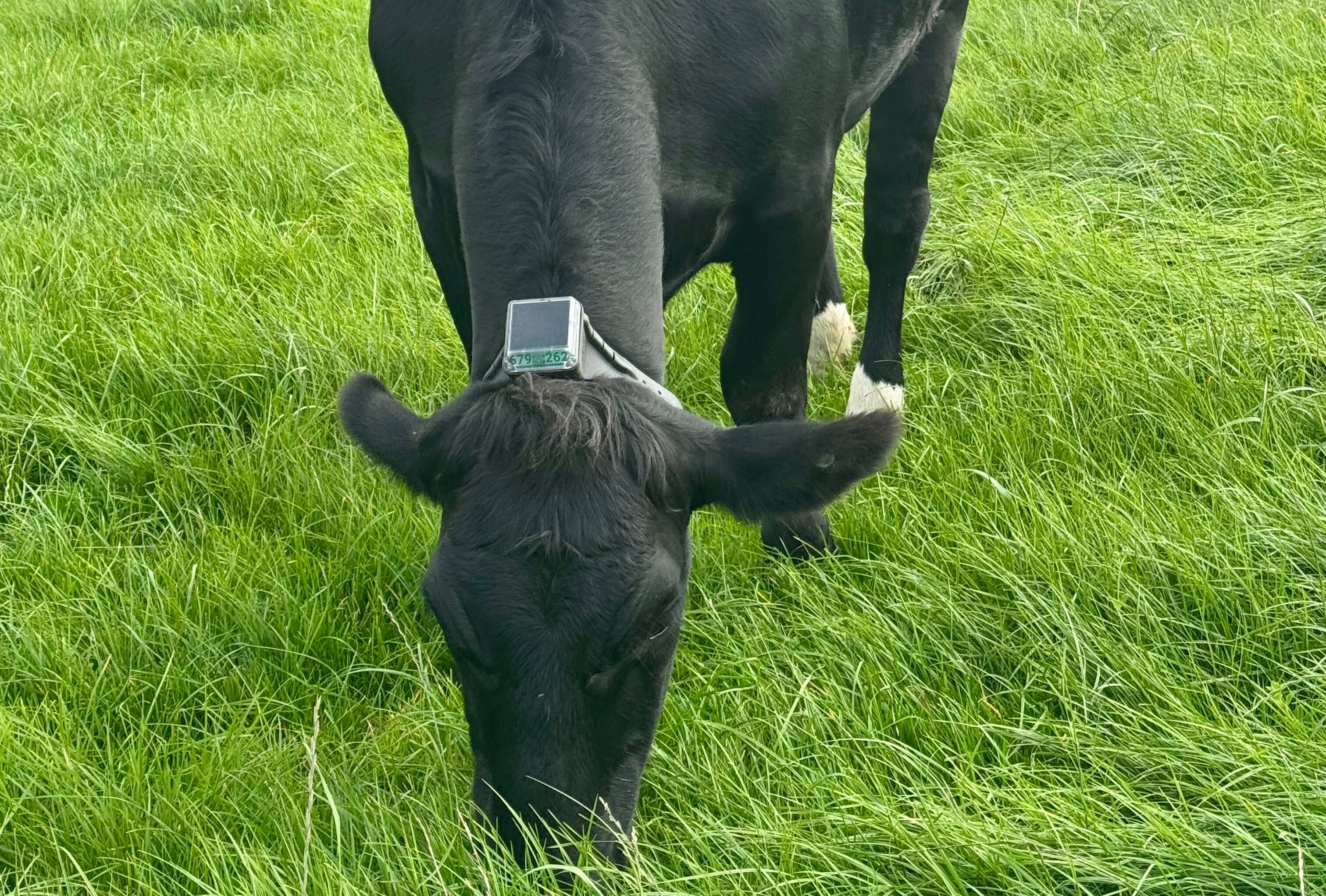
- Setting up the collars was super easy. The app’s QR code feature makes it straightforward and quick. Plus, to charge the collars, all you have to do is stick them outside in the sun.
- You can add tag numbers and nicknames for each collar, which is helpful for monitoring individual behaviour during a research trial.
- The app's alert feature is also valuable, it detects unusual activity levels and sends notifications. This was particularly useful in the early stages when a heifer managed to remove her collar, alerting us when we were learning how tight to secure them.
- The notifications have also been helpful when animals are more active, allowing us to study their behaviour closely.
- The Monil app has been pretty fast when adding or removing collars from paddocks, and we’ve had no issues with GPS drift. This is likely due to the technology's combination of different GNSS services.
- Monil has invested considerable effort into the collar's ergonomic design and its fit on the animals. The collar sits loosely around the neck, allowing for free movement; the counterweight at the bottom ensures that it resets itself if it turns around.
- Because the collar is loosely fitted, we have not encountered any issues with rubbing or chafing, which is something to consider when using any kind of wearable tech on livestock.
Are you interested in how Monil can help your farm?
Register here for a no-obligation offer.